Home News Bally Astrocade ROMS

Bally Astrocade ROMS

Get ready to relive the golden age of arcade gaming! We're thrilled to announce that the complete collection of Bally Astrocade game roms is now available for download exclusively for our members. Dive into a treasure trove of classic titles that defined a generation of home arcade fun. If you're a fan of retro gaming, this is an absolute must-have! Join us today to access these incredible roms and start playing your favorite Bally Astrocade games again.

Here’s what’s currently available in the Bally Astrocade Collection
Become a Platinum member Today and gain “Immediate Access” to ALL downloads available on the ZZ-members.com website!

  • 280 Zzzap+Dodgem
  • Amazing Maze+Tic Tac Toe
  • Artillery Duel
  • Astro Battle 2009
  • Bally BASIC
  • Bally Pin
  • Biorhythm
  • Blackjack+Poker+Acey-Deucy
  • Blast Droids
  • Bowling
  • Brickyard+Clowns
  • CandyMan
  • Checkers+Backgammon
  • Claim Jumpers
  • Coloring Book
  • Conan the Barbarian
  • Cosmic Raiders
  • Dog Patch
  • Football
  • Galactic Invasion
  • Galaxian
  • Grand Prix+Demolition Derby
  • Gunfight+Checkmate+Calculator+Scribbling
  • ICBM Attack
  • Letter Match+Spell ‘N Score+Crosswords
  • Life
  • Machine Language Manager
  • Mazeman
  • Ms. CandyMan
  • Muncher
  • Music Maker
  • Pirates Chase
  • Red Baron+Panzer Attack
  • Road Toad
  • Sea Devil
  • Seawolf+Missile
  • Sloshed
  • Sneaky Snake
  • Soccer
  • Solar Conqueror
  • Space Fortress
  • Space Invaders
  • Speed Math+Bingo Math
  • Star Battle
  • Super Slope
  • The Incredible Wizard
  • Tornado Baseball+Tennis+Hockey+Handball
  • Treasure Cove

Why Hello There! 👋

It’s nice to meet you!

Would you like to join our exclusive Members email list? You'll be notified of what's happening and everything being done for our "Wonderful" members. No membership required!

mailbox

We do not spam! We only email when new content is added or updated. Please read our privacy policy and terms of service for more info.

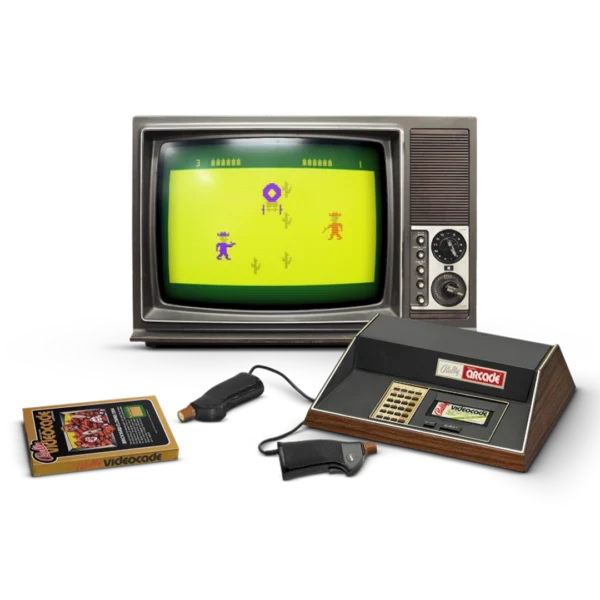
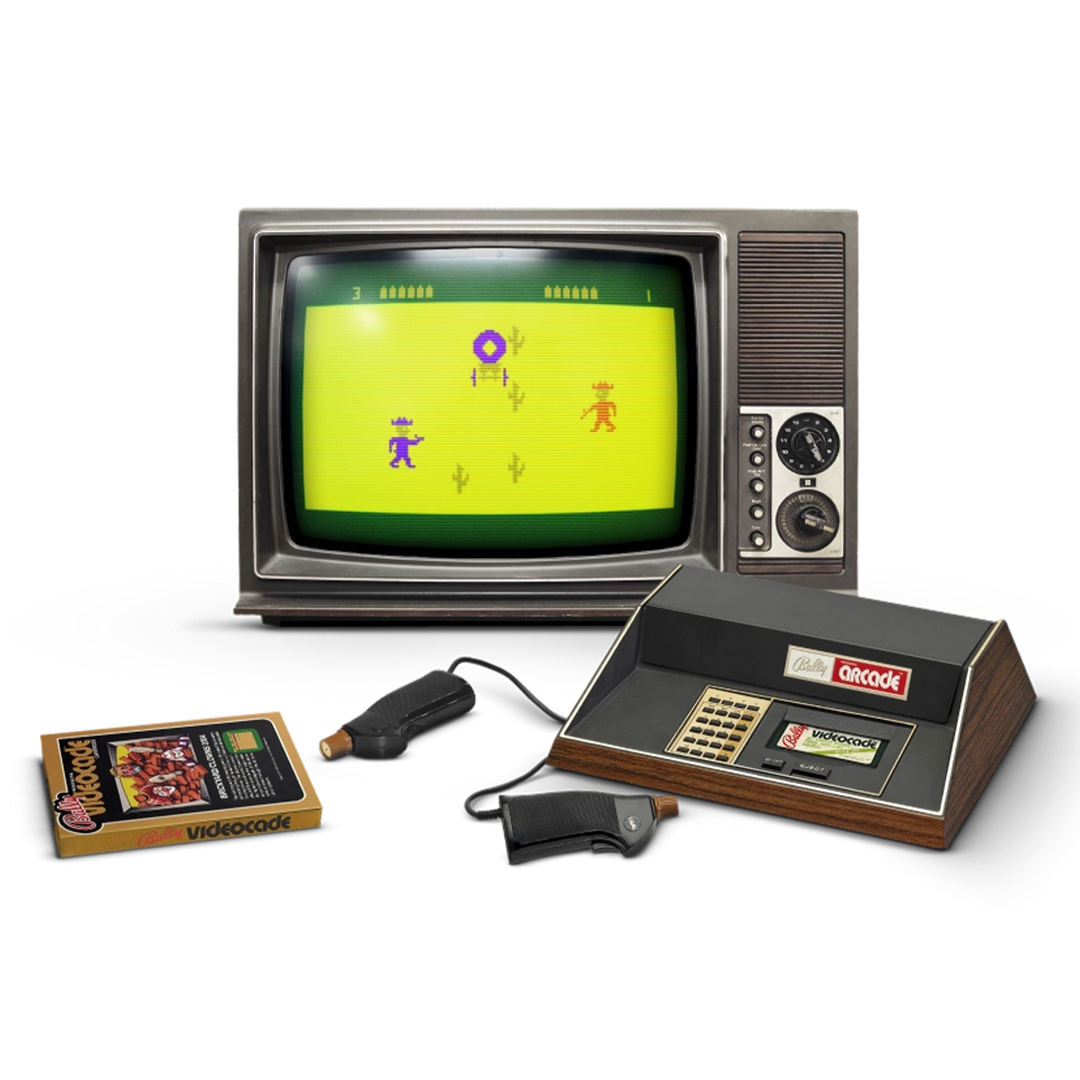
Bally Astrocade Console

Bally Astrocade

The Bally Astrocade (also known as Bally Arcade and initially as Bally ABA-1000) is a second-generation home video game console and simple computer system designed by a team at Midway, at that time the video game division of Bally.

It was originally announced as the “Bally Home Library Computer” in October 1977 and made available for mail order in December 1977. Due to production delays, the units were first released to stores in April 1978 and its branding changed to “Bally Professional Arcade”. It was marketed only for a limited time before Bally decided to exit the market. The rights were later picked up by a third-party company, who re-released it and sold it until around 1984.

The Astrocade is particularly notable for its very powerful graphics capabilities for the time of release, and for the difficulty in accessing those capabilities.

Nutting and Midway
In the late 1970s, Midway contracted Dave Nutting Associates to design a video display chip that could be used in all of their videogame systems, from standup arcade games, to a home computer system. The system Nutting delivered was used in most of Midway’s classic arcade games of the era, including Gorf and Wizard of Wor. The chipset supported what was at that time relatively high resolution of 320×204 in four colors per line, although to access this mode required memory that could be accessed at a faster rate than the common 2 MHz dynamic RAM of the era.